Residential Movers in Asheville, NC
Asheville Movers handles home moves across the Asheville area, from a one-bedroom rental to a four-bedroom house. That covers every room, plus the garage and attic most people forget until the final days. Furniture is padded, taken apart where needed, and rebuilt where you want it. In-state movers need a certificate from the North Carolina Utilities Commission. Share your addresses and date.
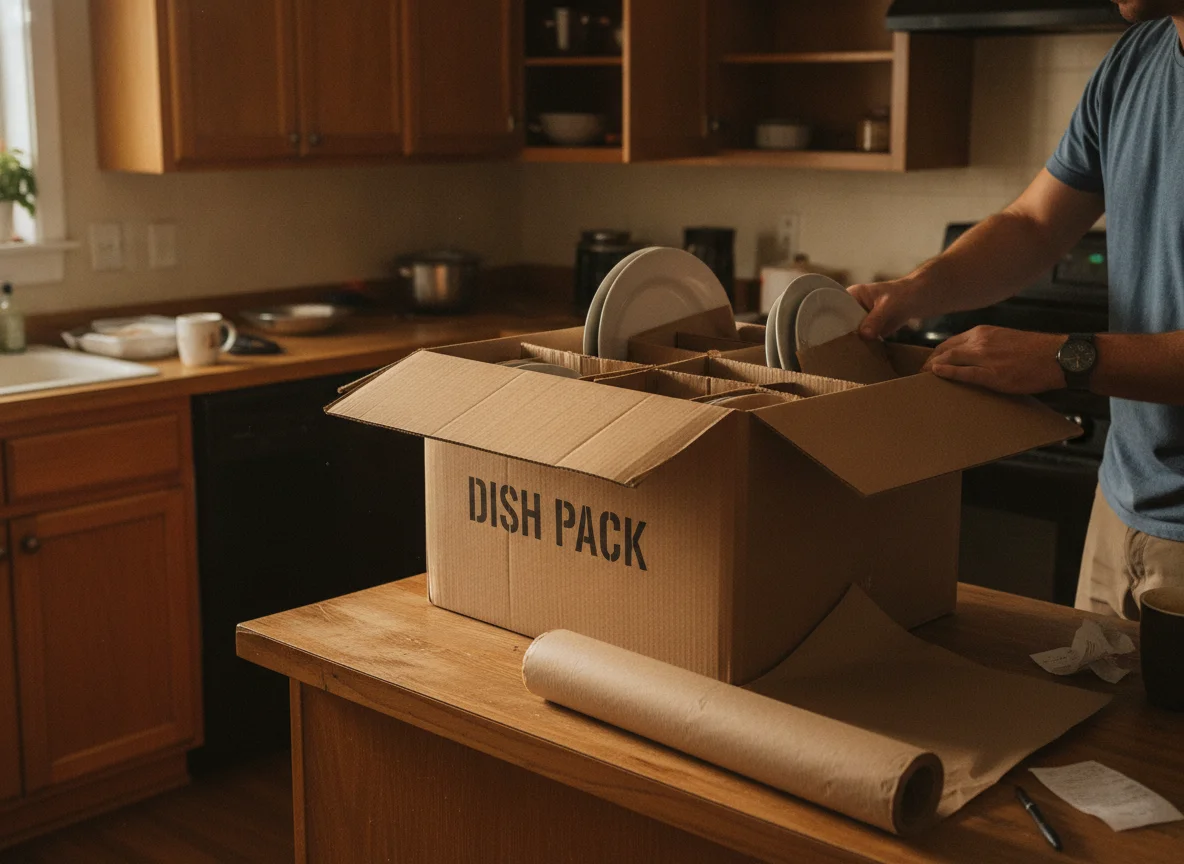
Moving a full house, room after room
Here is how a house move differs from other jobs. Rather than one task, it is eight or nine small ones, each with its own headaches:
Kitchen
Slowest room in almost any house, so it often sets the schedule. Put glassware and ceramics in dish packs with cell dividers, never newspaper stacks. Go through the pantry instead of boxing it all, removing opened bottles, leakers and expired food. Pair small appliances with their cords and parts. Defrost the fridge the evening before and drain its water and ice-maker lines. Budget extra time and start here early.
Bedrooms
Bedrooms strip down fast and rebuild slowly. Beds are dismantled with hardware bagged and tagged to its own frame. Hanging clothes go from the closet into wardrobe cartons and back onto rails at the new place, still on hangers, which saves hours and a lot of ironing. The primary closet always holds more than it looks, so plan extra cartons.
Children's rooms
Pack them at the end and unpack them first. Hold back a box of what your child treasures most, taking it in the car, and make their bed up at the new house before touching anything else.
Living room
Measuring counts in this room. Test sofas and sectionals against the doorway before lifting, ship TVs upright in their own cartons, and leave wall mounts alone unless an electrician is removing them along with the wiring behind them, which is a separate job.
Home office
Photograph the cabling before unplugging a thing. Drives, backups and anything you couldn't download again should ride in your own car.
Bathrooms
Small rooms with a habit of leaking. Bag liquids twice, stand them upright and give them a carton apart from the towels.
Garage, basement, shed and attic
Most people underestimate these more than anything else in a house move, so begin there rather than finishing with them. Drain fuel-powered tools, sort paint and chemicals well before the day, and clear the attic while you still have time to decide what deserves a place on the truck. More moves run late over a garage than over furniture.
Yard
Grills, planters, patio sets and swing sets all need time to be dismantled, and the propane cylinder never goes on the truck.
Fixtures that stay with the home
Sort this out early, since few things spark more disputes at closing. Ovens built in, light fixtures, ceiling fans, curtains, wall-mounted shelves and TV mounts are normally counted as part of the property, not your belongings, but normally is no contract. Read your sale or lease paperwork, and make a note of what leaves and what stays, then tell the movers. A doubtful item is far easier to resolve with the other side a week ahead than with movers waiting in the hallway, and it avoids an ugly phone call after the keys change hands.
Matching the move to your closing or lease dates
Keys changing hands on both sides at one moment is the ideal, and rarely the reality. The mismatch tends to land in one of two ways, and each is workable when raised early:
A stretch between homes with nowhere to live.
Belongings wait in storage between dates, up to 180 days on a regulated North Carolina move, while you live from a suitcase.
An overlap.
The gentler case: spread the job over two days, bring beds and kitchen first, and return afterward for the garage.
Whichever applies, flag it as soon as the dates look like they might clash. A gap you plan for is plain scheduling; one that surfaces on the morning is a scramble.
Moving day with family in the house
Where possible, have children and pets spend the day elsewhere, or behind a closed door at the least. Wide-open doors, propped gates and heavy furniture negotiating tight corners are a dangerous combination for both, and for the carriers.
Fill one box for the car: sheets, towels, toiletries, phone chargers, prescriptions, coffee, a change of clothes and the moving paperwork you'll want in hand.
Station someone at the new address who can tell crews which room gets each item. A call made at the door beats moving furniture twice.
Feed everyone. A house move takes longer than planned, and lunch is the thing nobody remembers until it is late.
What shifts the price
Volume, how much must come apart, how much packing you have finished, and, usually the heaviest factor, how hard the house is to empty. Stairs, a long carry to the curb, a driveway where a truck can't park and doorways that force furniture to be dismantled outweigh square footage. Movers must give a written estimate on request, though most won't write one without seeing the items. The local moving page explains more.
Heading out of state? The situation shifts a great deal; see long distance moving for what applies.
How belongings are kept safe
Beyond standard wrapping and padding, ask what extra supplies a house move gets, such as:
Wardrobe cartons
Keep hanging clothes on their hangers throughout.
Dish packs with dividers
Built for glassware and ceramics, which cope with stacking far better than newspaper-wrapped plates.
Mirror and art cartons
For framed pieces, mirrors and glass tops, on edge.
Mattress covers
Keeps stair walls and driveways clear of marks and scuffs.
Appliance dollies and straps
Meant for washers, dryers and fridges, with the washer's shipping bolts back in so the drum cannot hammer the cabinet around.
Floor runners, jamb padding and banister wraps
Used at both homes, since most damage in a house move lands on the building and not on the furniture itself.
Work reaches Asheville proper, from West Asheville and Montford Hills out toward Woodfin, Swannanoa, Fletcher, Canton and neighboring towns.
Quick answers
Are appliances part of it?
Washers, dryers and fridges are fine. Anything gas-fired or hard-wired has to be disconnected ahead of time by the relevant trade and reconnected by that trade at the new place; that sits outside moving work, so schedule it separately and early. When appliances are staying with the house, mention it at the start, or they may be wrapped by mistake.
What if my closing slips?
Say so the moment you hear. Slipping dates are common in a property chain and amount to a scheduling matter, but the problem is far smaller the week before than the night before.
Is a two-day move better than one?
Frequently, with a bigger house, particularly if both addresses are open to you together. Beds, kitchen and kids' bedrooms go across on day one so the new place works that night, while the garage, attic and storerooms wait for day two.
What time should packing take?
More than you'd guess, and the kitchen and garage are the rooms that overrun. If you want out of it, packing services can take on the full house or only selected rooms, and the kitchen is the one people most often pass along to someone else.
Are offices moved as well?
Yes, though business relocations follow another plan and often happen after closing time; read about commercial moving.
Ready to move house?
Tell us where you're moving from and to, how many bedrooms are coming, the timing, and whether dates are fixed. Add anything oversized or fragile. The North Carolina Department of Justice advises a written inventory.