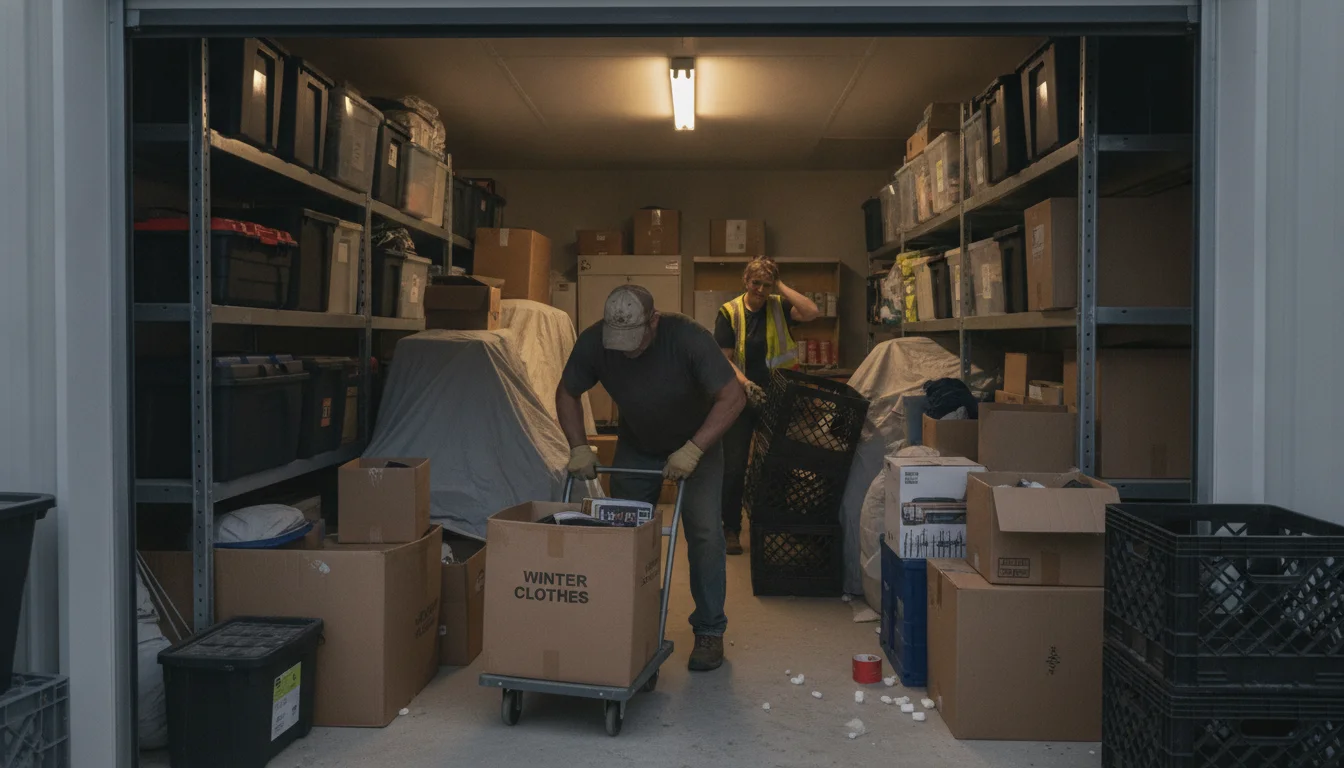
Need a quick, reliable way to pick the right storage unit? This guide gives you a straight answer fast: match storage unit sizes to your rooms and largest items, plan a center aisle with shelves, and choose the next size up if you’re on the fence to keep access easy and fragile items safe.
A storage unit size refers to its floor dimensions in feet (for example, 5×5 or 10×20). The simplest way to choose is to map the space to your actual rooms and bulky belongings, then plan for an aisle and shelving that turn height into safe, usable layers. If you’re between sizes, select the larger unit to maintain access and reduce the risk of damage.
Key Takeaways
- Start by listing furnished rooms, your biggest items, and estimated boxes to narrow storage unit sizes quickly.
- Build in a center aisle and use shelving so you can reach items without unstacking walls of boxes.
- Climate control helps protect wood, paper, photos, and electronics by maintaining steady temperature and humidity.
- If you’re torn between two sizes, pick the larger one for safer stacking and easier access.
- For packing, keep heavy boxes low, light boxes high, and label two sides of every box.
Storage unit sizes are measured in floor space, in feet, like 5×5 or 10×20. The best way to choose is to match the space to your rooms and big items, then plan paths and shelves. If you are between sizes, pick the next size up for easy access and to protect fragile items.
You can use this for home and office moves. Asheville Movers works across the city every week and knows that smart packing saves time and stress. It also makes move-in day faster and safer.
Start here • Size guide • Measure your stuff • Features that affect capacity • Pack for access • Budgeting and timing • Move-day plan
Start here: the fastest way to pick the right storage unit size
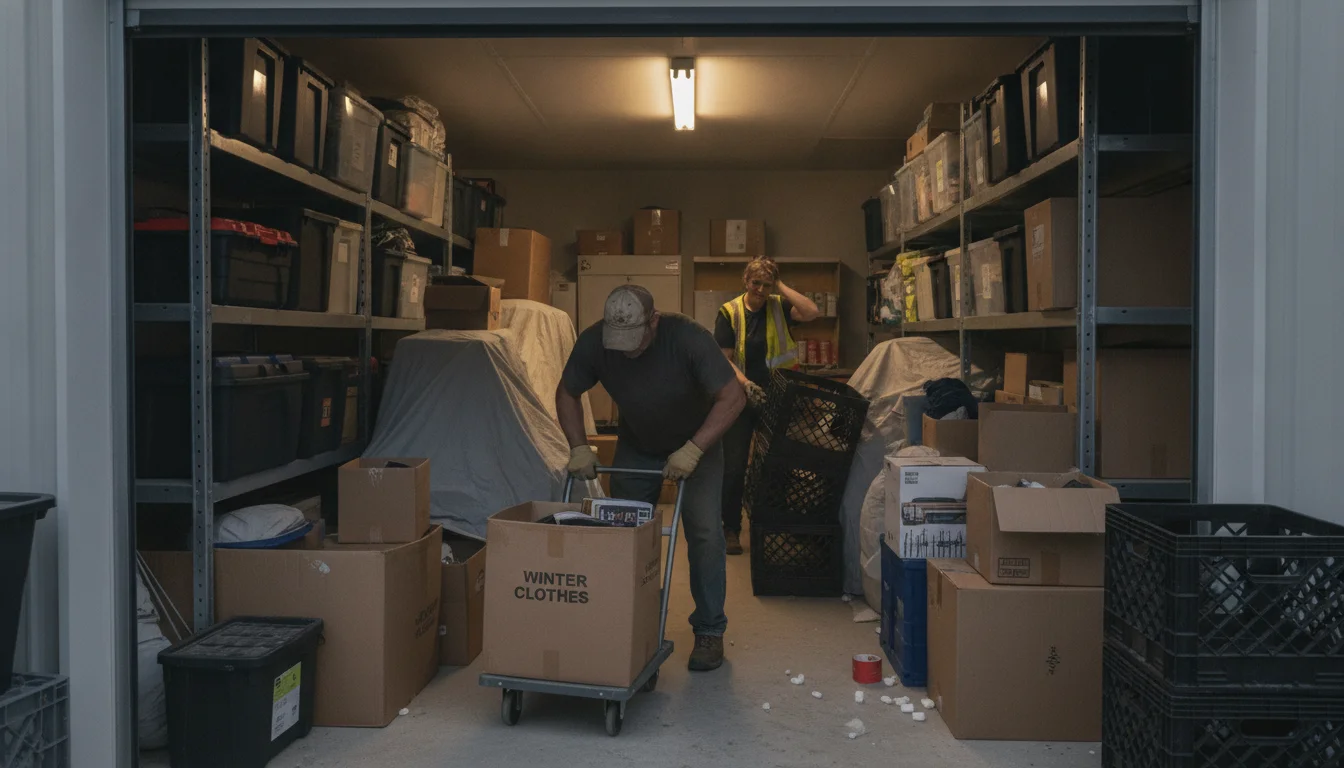
You can narrow to two sizes in about a minute. First, count your rooms that have furniture. Then, list your largest items by name. Finally, note how many boxes you expect. This quick list points you to a size range fast. You can refine it with the guides below.
A 60-second checklist to narrow your options
- Count “furnished” rooms: bedrooms, living room, dining room, office.
- List big items: sofa, sectional, king bed, dresser, dining table, appliances.
- Estimate boxes: small (books/dishes), medium (linens), large (light items).
- Pick access: drive-up or indoor. Note stairs or elevator.
- Choose margin: if between sizes, go up one size.
This list trims out the guesswork. It also sets up your packing plan.
Common mistakes that lead to over- or under-sizing
One common mistake is counting bedrooms but not the garage or patio set. Another is forgetting tall items like bookcases and wardrobes. People also stack too high on paper and plan for towers of boxes. In real life, safe stacks are lower. Leave space for a center aisle. You also need room to bend and lift. This protects your back and your things.
A last mistake is skipping shelves. Shelving can “add” space by using the height. It keeps fragile items safe and easy to reach. When in doubt, pick the next size up. It beats a second unit or crushed boxes.
Size guide by unit dimensions and what fits
Think of each size like a room in a home. A 5×5 is a small closet. A 5×10 is a walk-in closet. A 10×10 is a small bedroom. A 10×15 is a large bedroom. A 10×20 is a one-car garage. This picture makes it easy to match your home to a space.
Walkable examples from studio to 4-bedroom homes
- 5×5: Boxes, small shelves, side tables, a twin bed frame, and decor. Good for first-time renters and seasonal bins.
- 5×10: Studio or small 1-bedroom set. Mattress set, a small sofa, dresser, bike, and 15–20 boxes.
- 10×10: Typical 1–2 bedroom home. Queen bed, sofa, dining table, chairs, dressers, and 25–40 boxes.
- 10×15: 2–3 bedroom home. Sectional, king bed, appliances, bikes, bookcases, and 40–60 boxes.
- 10×20: About a 3-bedroom home. Multiple beds, large sofa, dining set, patio gear, and 60+ boxes. Larger homes often need a 10×30 or two units.
These are guides, not rules. Ceiling height and furniture style change the fit. A sectional or a bulky recliner needs more room than a love seat.
Vehicle, office, and specialty storage notes
Some 10×20 units hold small vehicles. Always check rules on fuel and batteries. Office storage often needs space for files, sample racks, and tech crates. Plan for a clear aisle to pull a box without moving a wall of bins. For instruments, art, or wine, choose climate control. Heat and humidity can harm wood, glue, and paper. Climate control keeps a steady temperature and humidity range. Check the facility for indoor units that hold that steady range.
Specialty items like safes or large tools need careful loading. Use Loading & Unloading Help to protect floors and backs. For office moves, Commercial & Office Movers can stage items in the unit for fast access.
Measure your stuff: cubic feet, boxes, and furniture footprints
Cubic feet is length x width x height, measured in feet. Boxes list size in inches, so multiply the three sides and divide by 1,728 to get cubic feet. Most units list floor space, not volume. So think in “footprints” on the floor and use shelves to build up. This keeps stacks safe and avoids damage.
How to estimate volume without a tape measure
You can estimate with simple steps. Count boxes by size. For furniture, use steps. One step is about two to two and a half feet. Pace the sofa and table. Write down the steps for length and width. Round up a little for padding and blankets. Stack boxes by weight: heavy low, light high.
You can also group by zones. Bedroom set, living room set, and kitchen boxes. This helps with the loading order later. It also keeps your plan clear and easy to follow.
When ceiling height changes the math
Ceiling height helps, but only to a point. Most units are eight to ten feet tall. You cannot stack to the roof safely. A safe stack is head-high for most folks. That is about five to six feet. Shelves change this. Shelving turns height into safe layers. This is why a 10×10 with shelves can fit more than a 10×10 with stacks.
Also watch the door size. Roll-up doors need room to clear the opening. Tall wardrobes may need to tilt. Plan a tilt path in your layout. Leave space to protect corners and edges.
Features that affect capacity: climate control, doors, and access
Not all 10×10 units hold the same amount in practice. Access and features change how you can use the space. A drive-up unit is like a small garage. An indoor unit is in a building. Each has pros and cons for weight, weather, and time.
Drive-up vs. indoor units and roll-up doors
Drive-up units make loading fast. You back the truck to the door. This helps with heavy sofas and appliances. It also helps in rain, since you move less distance. Indoor units often have carts, elevators, and longer paths. But indoor units tend to be climate controlled. That is better for wood, paper, and electronics.
Roll-up doors are common. They give a wide, clear opening. Swing doors can limit tall items. Measure your biggest piece. Make sure it clears the door width and height. Ask about corner turns in hallways for indoor units.
Security, hours, elevators, and cart access
Security can change when and how you pack. Gated access and cameras add peace of mind. Access hours matter too. If you plan late-night work, check the hours first. Elevators and carts save time and reduce strain. Ask how many carts are on-site. Check if you can reserve one on move day. This matters in busy times.
For fragile loads or long hauls, Packing Services can wrap dishes, glass, and mirrors. Proper dish packing needs paper, bubble wrap, and tight fills in the box. Plates should stand on edge with wrap between them. Bowls need crumpled paper nests. Seal and label by room.
Pack for access: layouts, shelving, and safe stacking
A good layout saves hours later. The goal is simple: reach the back without moving walls of boxes. Plan a center aisle from the door to the back. Place shelves on both sides if you can. Heavier items sit low, with paths clear for knees and feet.
Create a center aisle and simple map
Sketch your unit on paper. Draw a center aisle at least two feet wide. Mark shelf zones left and right. Place the largest furniture at the back and sides. Leave vents and doors clear. Tape your map to the inside wall near the door. Take a photo of the map on your phone. Update it if you move things.
A simple map helps new helpers, too. If friends or Apartment Movers help you, they can follow the map without you standing there to direct every box.
Labeling system and item tracker you’ll actually use
Use big, bold labels on two sides of every box. Write room and a short list of items. Add a number to each box and keep a simple list on your phone: Box 12, “Kitchen: bowls, mugs, wrap.” Color tape can group rooms fast. Keep a small “open first” set for each room.
For fragile items, fill space so nothing shifts. For plates, wrap each in paper or foam and stand them on edge in a dish pack. For bowls, add padding between each and around the sides. For bubble wrap on plates, one to two layers is often enough when boxes are tight and lined. Add a fragile label on at least two sides.
Budgeting and timing: prices, promotions, and how long to rent
Costs vary by size, features, and time of year. You do not need to lock a choice before you know your load. Ask about holds and how fast you can switch sizes if the first try is off. Timing matters too. Set your rental start a few days before move day when you can.
Insurance, deposits, and cancellation fine print
Read the terms. Many sites require proof of insurance or sell a plan. Check what is covered: theft, fire, and water events. Ask about deposits and refunds. Note the notice period to end the rental. Get gate code rules, access hours, and any lock type needed.
Also check if a lock is included. If not, buy a disc lock. Disc locks resist cutting better than common padlocks. Keep a spare key in a safe place.
Ways to save without risking damage
Pick the smallest unit that still allows safe access. Use shelves to turn height into real capacity. Disassemble beds and tables. Wrap and bundle parts in a box with the hardware in a bag. Stack by weight and item strength. Use uniform box sizes when you can. They stack better and reduce voids.
Ask if month-to-month renews at the same terms. If you plan a long hold, ask about prepay options and move-out rules. You can also share a larger unit with a trusted friend if the site allows it. Keep each area labeled and mapped.
Move-day plan and pro help: loading order, transport, and handoffs
A simple move-day plan keeps things safe and on time. Load the truck by weight and by room. Unload into the unit by your map. Keep paths clear. Use gear like dollies and straps. Plan the order before the truck arrives. It helps if the forecast changes or help runs late.
Coordinating movers, trucks, and storage timelines
Start with dates. Book the unit, then book your truck or movers. If you need labor only, Loading & Unloading Help is a smart pick. For packing and fragile prep, use Packing Services. If you are moving across states, Long Distance Movers can sync pickup and drop-off with the unit schedule. Share gate codes and access hours in writing. Keep a copy on your phone.
If this is part of downsizing or a military (PCS) move, note what must stay handy. Seasonal clothes, kids’ items, and work files should be near the front. Label them as “front.” This reduces stress in the first weeks after the move.
Checklist to finish in one trip
- Confirm unit size and access hours the day before.
- Stage boxes by room near the door at home.
- Load heavy furniture first. Then appliances. Then boxes.
- Keep dish boxes upright. Mark arrows and “fragile.”
- Unload by your map. Build shelves first if you have them.
- Make a clear center aisle. Photograph the final layout.
Bold steps like these turn a long day into a smooth one. They also protect your back and your budget.
Key takeaways
- Pick a unit with a center aisle in mind, not max stacks.
- If between two storage unit sizes, choose the next size up.
- Shelves make height usable and keep fragile items safe.
- Label and map so you can find things fast months later.
- Climate control is best for wood, paper, and electronics.
Frequently Asked Questions
How do I choose between a 5×10 and a 10×10?
List your big pieces and count boxes. A 5×10 fits a studio set and about 15–20 boxes. A 10×10 fits a 1–2 bedroom home with 25–40 boxes. If you want an aisle or have a sectional, go with the 10×10.
Do I need climate control for storage?
If you store wood, paper, photos, instruments, or electronics, yes. Climate control holds a steady range for heat and humidity. That helps prevent warping, mold, and glue failure. For short holds of metal or plastic gear, drive-up may be fine.
What is the best way to pack dishes and plates?
Wrap each plate and bowl. Plates stand on edge in a dish box with padding. Bowls get paper nests. Fill spaces so nothing shifts. Label two sides “fragile.” For longer holds, choose climate control to help protect paper and ceramics from moisture.
How high can I safely stack boxes?
Aim for chest to head height for most stacks. Heavy boxes go low, light ones high. Use uniform box sizes. Shelving is better than tall stacks. It turns height into stable layers and keeps fragile items safe.
Can movers load my unit for me?
Yes. Movers can load and stage items by your map. Loading & Unloading Help is great for this. For careful wrapping and crating, book Packing Services. For business items or a full office, consider Commercial & Office Movers for speed and safety.
Asheville Movers can help plan, pack, and load storage the right way. The team can set up your aisle, place shelves, and protect fragile items. If your move is part of a larger plan in Asheville, the crew can sync dates and handoffs.
Climate control guidelines can vary. For more on how heat and humidity affect wood and paper, see the National Park Service’s museum care page on temperature and relative humidity.
If you are unsure about the right unit size, features, or layout, get advice before move day to avoid hassles and keep your items protected in Asheville. For local guidance from Asheville Movers, reach out to the team.
If you are not sure which of these you are dealing with, it is worth having someone look at it before it turns into a bigger job. Get in touch with Asheville Movers today and we will tell you where you stand.