TV moving boxes help protect screens during a move, but the box is only one part of safe packing. The safest method also includes removing cables, covering the screen, adding soft padding, and keeping the TV upright. Good labels and careful loading help prevent drops, pressure, scratches, and lost parts.
A move can leave you with cords, remotes, screens, and small devices to sort. Packing them in a rush may cause cracked screens or missing chargers. A simple plan helps homeowners, tenants, and business owners prepare for the day of moving.
Asheville Movers helps customers prepare homes and offices for moves. Most steps below are safe for people to do themselves. Professional help may still be wise for large screens, heavy equipment, tight stairs, or a full packing project.
Table of Contents
- What supplies do you need to pack a TV and electronics?
- How should you prepare a TV before packing it?
- How do you pack a flat-screen TV in a moving box?
- How should you pack computers, monitors, and printers?
- How do you pack small electronics and their cords?
- How should you label and load boxes containing electronics?
- What should you do after moving electronics into the new home?
- Frequently Asked Questions
What supplies do you need to pack a TV and electronics?
The main supplies are a strong box, soft padding, paper, tape, and labels. Choose a box that fits the item without pressing against the screen. TV moving boxes are made for screens and may have foam corners or adjustable parts.
Choosing the right TV moving boxes and protective materials
A flat-screen needs support on every side. Look for a box made for the TV’s size and shape. A double-wall carton gives more support than a thin storage box. Foam corner guards, moving blankets, bubble wrap, and clean towels can add protection.
Use bubble wrap around the outside of a screen, not right against the display. Small air pockets can press into a delicate screen while it is handled. First cover the display with a soft, clean cloth or foam sheet. Then add bubble wrap with the bubbles facing outward.
Other useful supplies include painter’s tape, zip bags, cable ties, dividers, and a marker. Painter’s tape can hold a note without leaving much sticky residue. Cable ties keep cords neat, but they should not squeeze the wires.
What to do if you no longer have the original packaging
The original box helps, but you do not need it. Pick a sturdy carton with room for corner padding and soft cushioning. The TV should not slide when you gently move the closed box.
Do not use loose pieces that let the screen shift. Fill open spaces with crumpled paper, foam, or folded blankets. Keep heavy items away from the display. Asheville Movers can help Asheville homeowners decide whether a specialty box or packing service suits the move.
How should you prepare a TV before packing it?
Turn the TV off, unplug it, clean it, and check it before wrapping it. This protects the screen and makes setup easier later. Let the TV cool if it has been running.
Disconnecting, labeling, and photographing cables
Take a clear photo of the TV’s back before removing cables. The photo shows where each cord belongs. Place the cables in a labeled bag, such as “TV power and HDMI cords.”
Add a second label when several cords look alike. A small piece of painter’s tape can identify a cable without harm. Never pull a plug by its wire. Hold the plug and remove it gently.
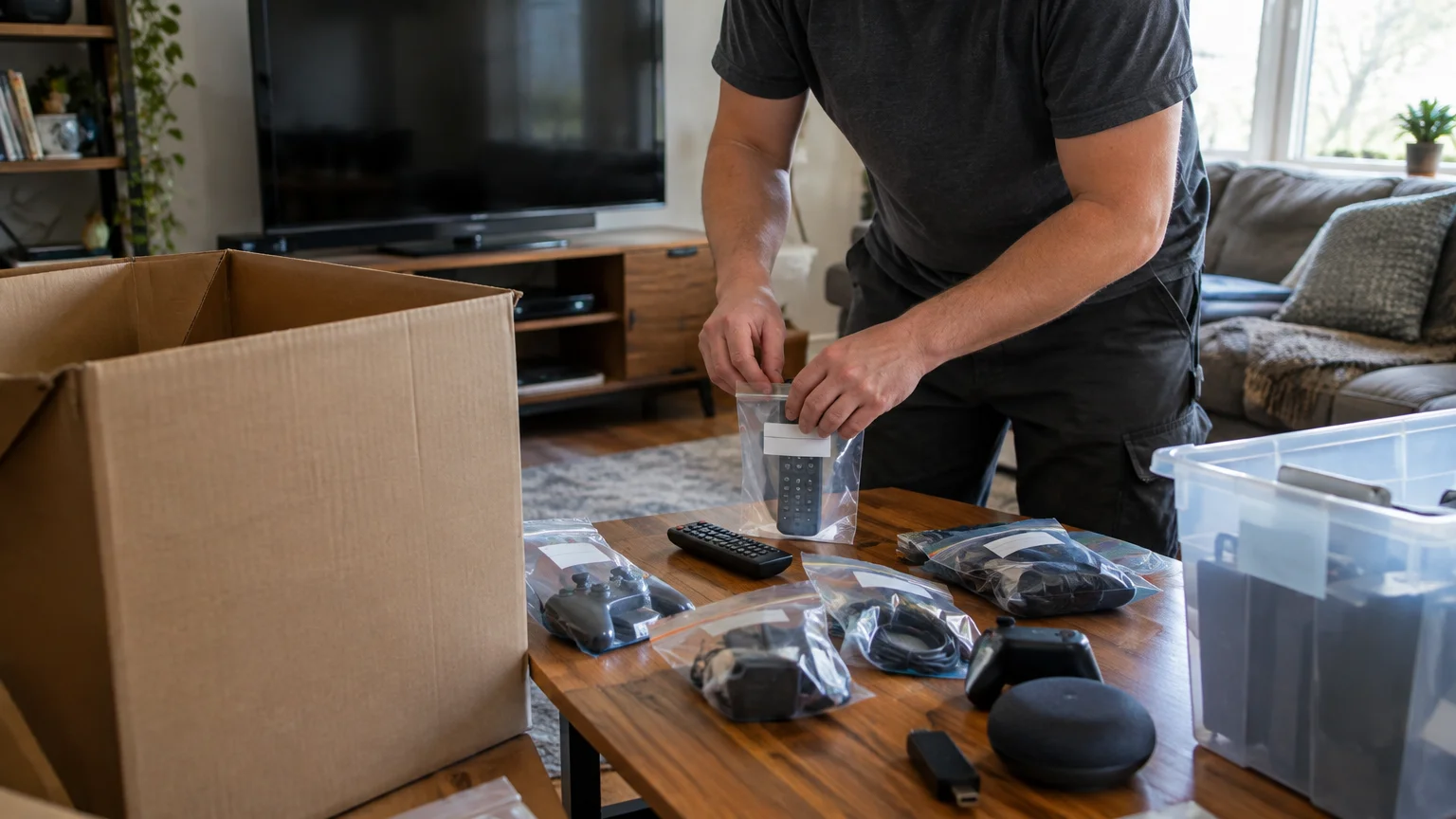
Keep the remote, power cord, streaming device, and wall mount parts together. Small pieces can vanish inside a large moving box. Put them in a sealed bag and tape the bag to the inside wall of the electronics box.
Cleaning and securing the screen and accessories
Dust the screen with a clean, dry microfiber cloth. Do not spray cleaner onto the display. Liquid may run into the edges and harm parts inside.
Remove the TV stand if it comes off. Wrap the stand and screws together in a small bag. Mark the bag clearly. If the stand stays attached, protect its edges with foam and make sure it cannot press into the screen.
Do not tape anything to the screen. Do not place books, tools, or heavy items on a wrapped TV. These checks are safe for most homeowners and do not need a professional.
How do you pack a flat-screen TV in a moving box?
Pack a flat-screen TV upright, with padding around the display and firm support at the corners. The screen should not touch the carton. Ask another person to help lift a large or heavy TV and reduce the risk of a drop.
Wrapping the screen without causing pressure damage
Start with a clean, soft layer over the display. Add foam or a moving blanket around the front, back, and sides. Keep the material smooth. Folds and hard edges can create pressure points.
Add corner guards before putting the TV in the box. You may use stretch film to hold blankets in place. Do not let it press on buttons or the screen. Stretch film does not replace proper padding.
Never carry a large TV by one corner. Hold it with both hands near the side edges. Keep the screen away from sharp objects while carrying it.
Positioning and cushioning the TV inside the box
Place the TV upright in the carton. Most flat screens should not lie flat during transport. Weight and movement can stress the display. Follow the maker’s instructions when they are available.
Add foam or folded blankets between the TV and each box wall. Leave no large open space, but do not force padding into a tight gap. Close the box and gently test for movement. If the TV shifts, add more soft cushioning.
Seal the carton with strong packing tape across the main seam. Add tape around the upper edges if needed. Write “FRAGILE,” “TV,” and “KEEP UPRIGHT” on several sides. Labels help, but careful handling still matters most.
How should you pack computers, monitors, and printers?
Computers, monitors, and printers need protection from impact, dust, and movement. Each item should have its own padding and, when possible, its own box. Do not pack a desktop tower, laptop, and monitor loose in one large carton.
Protecting towers, laptops, and monitors
Shut down computers fully before packing them. Do not pack a laptop while it is hot or running. Remove discs, USB devices, and memory cards. Place these small parts in labeled bags.
Wrap a desktop tower in an anti-static bag when one is available. An anti-static bag helps limit static electricity. Then add foam or a moving blanket. Keep the tower upright when its design or inner parts require it. Do not put heavy items on top.
Pack monitors like TVs. Cover the display first, then add soft padding and corner protection. A laptop can go into a padded sleeve or case before entering a strong box. Fill empty space so the computer cannot slide.
Packing printers and securing moving parts
Remove paper and loose trays from a printer. Follow the maker’s instructions about removing or securing ink or toner. Keep removed ink and toner sealed in separate bags in case they leak. Follow the maker’s directions for securing the print head or carriage.
Use painter’s tape to hold doors, trays, and covers closed when needed. Do not use strong tape on painted or delicate surfaces. Wrap the printer with padding and place it level unless the maker gives other instructions.
A business move may include servers, copiers, or other special equipment. These items may need custom packing and careful transport. Asheville Movers can help local offices in Serving the main Asheville area — from West Asheville and Montford Hills to Woodfin, Swannanoa, Fletcher, Canton, and nearby communities. plan packing for delicate equipment without asking staff to handle heavy items alone.
How do you pack small electronics and their cords?
Small electronics are easier to manage when each item is cleaned, labeled, and grouped. Remotes, chargers, controllers, speakers, and streaming devices should not sit loose in a large carton.
Sorting remotes, chargers, controllers, and cables
Group each accessory with the device it serves. Put a remote in a labeled bag, and pack loose batteries separately with protected terminals. Keep batteries separate from devices when the maker advises it, especially during long storage.
Sort cords by room or device. Use a soft cable tie or hook-and-loop strap on each cord. Avoid tight knots because they may damage the wire. A photo of each device and its cords can make setup easier.
Use small boxes inside a larger electronics carton for tiny parts. Label each inner box clearly. This works well for game controllers, smart speakers, cameras, tablets, and computer accessories.
Preventing scratches, tangles, and missing accessories
Wrap screens, lenses, and glossy surfaces in soft cloth. Keep metal plugs away from displays and painted surfaces. Do not place loose cables on delicate devices.
A simple inventory can prevent missing items. List the device, its cord, remote, and special parts. Keep the list inside the box and take a photo before sealing it.
If an item has important data, back it up before the move. A moving company can protect packed items, but it cannot replace lost files. Data backup is a safe task for the owner and should happen before moving day.
How should you label and load boxes containing electronics?
Electronics boxes should show what they hold, which room they belong in, and which side stays up. Load them where they will not be crushed, soaked, or shaken. Good labels guide the crew, but they cannot make a weak box safe.
What information to write on each electronics box
Write the device name on at least two sides of the carton. Add the destination room and words such as “FRAGILE” and “KEEP UPRIGHT.” Mark boxes that contain cords or small parts.
Numbering boxes helps with a larger move. For example, “Living room electronics, 1 of 3” shows if a box is missing. Keep the inventory with your other moving records.
Do not write passwords or private account details on boxes. Keep those details secure. A label only needs enough information for safe handling and unpacking.
Where to place delicate electronics in the moving vehicle
Place electronics on a stable surface away from heavy furniture, tools, and loose metal. Keep boxes upright and secure them so they cannot slide. Never place them where other cargo can fall on them.
Protect cartons from rain, snow, and damp floors. Climate changes can affect some devices, so let cold electronics reach room temperature before turning them on. A short wait may help prevent moisture problems.
On moving day, professional movers can handle hard carries, narrow stairs, elevators, and heavy screens. A local team such as Asheville Movers may also help coordinate packing when a home or office has more equipment than the owner can manage.
What should you do after moving electronics into the new home?
Unpack electronics on a clear, dry surface and check each item before connecting it. Look for cracked screens, bent ports, loose parts, or damaged cords. Do not turn on a device that looks wet or badly damaged.
Unpacking electronics safely and checking for damage
Take photos as each box opens. Compare the contents with your inventory. Remove padding slowly and keep small bags with their matching devices.
Let electronics sit at room temperature if they came from a very cold or hot vehicle. Check the maker’s instructions before powering them up. Reconnect cables by using the photos taken before the move.
Test one device at a time. Start with the power connection, then check the display, sound, remote, and other basic functions. If something does not work, unplug it and inspect the cable before trying again.
When professional movers can help with delicate equipment
Most people can pack small electronics and a few household screens themselves. Professional help makes sense when a TV is very large, the route has stairs, the item needs a custom crate, or the move includes many devices.
Movers can also help tenants protect walls and floors in an apartment. Business owners may need help limiting downtime while computers and office equipment move. Asheville Movers serves customers in and near Asheville with moving support suited to the job’s size and access needs.
The safest plan is simple: prepare each device, use the right padding, keep boxes upright, and check items before use. Contact us today to discuss packing and moving help for delicate electronics.
Key takeaways
- Choose a strong box that fits the TV and leaves room for soft padding.
- Cover the screen before adding bubble wrap or other outside protection.
- Keep TVs upright and secure them so they cannot slide inside the box.
- Label cords, remotes, and small parts with the device they serve.
- Let electronics reach room temperature before turning them on.
Frequently Asked Questions
Should a TV be packed upright or flat?
A TV should usually be packed and moved upright. This helps limit pressure on the display during handling. It needs padding on every side, firm corner support, and no room to slide inside the carton. Always follow the maker’s guidance when it gives different transport instructions.
Can bubble wrap touch a TV screen?
Bubble wrap should not press directly against a TV screen. Place a soft, clean cloth or foam sheet between the display and bubble wrap. Wrap the unit gently, then add corner protection and a strong box. Too much pressure can damage a delicate flat screen.
What is the best box for a large television?
The best box fits the TV closely while leaving room for soft padding and corner guards. A specialty TV carton is often easier than a regular box. If the original carton is gone, choose a strong box that keeps the screen upright and prevents movement.
How should someone pack TV cords and remotes?
Place each cord and remote in a labeled bag with the device it serves. A photo of the connections can help during setup. Use soft cable ties instead of tight knots. Keep small bags inside the main electronics box so they do not get lost.
When should a mover pack a television?
A mover can help when the television is large, heavy, valuable, hard to carry, or near stairs and tight turns. Professional packing may also help during an office move with many monitors and devices. Small TVs and simple accessories are often safe for an owner to pack.
If you are unsure about the safest method, ask for help before the move becomes harder. Asheville Movers can discuss the packing and moving support that fits your home or office.
If you are not sure what you are dealing with, it is worth having someone look at it before it turns into a bigger job. Get in touch with Asheville Movers today and we will tell you where you stand.