The best answer to where to get moving boxes for free is to ask local stores, neighbors, offices, and online groups early. Look for clean, dry, strong boxes in several sizes. Save small cartons for heavy items and large cartons for light goods so packing stays safe and simple.
Moving often begins with only a few boxes. Soon, the pile can grow quickly. Finding free boxes can help households prepare without buying every packing supply. It also gives strong cardboard another use before it enters the recycling bin.
Asheville Movers helps homeowners, tenants, and business owners plan safer moves. The right box source depends on what you need to pack, how far it will travel, and who will carry it.
Table of Contents
- Where can you get free moving boxes?
- Which stores are most likely to give away moving boxes?
- Where can you find free moving boxes online?
- What types of free boxes are safe to use for moving?
- How many moving boxes do you need?
- How should you prepare and pack free moving boxes?
- When should you buy moving boxes or rent reusable containers?
- Key takeaways
- Frequently Asked Questions
- Conclusion
Where can you get free moving boxes?
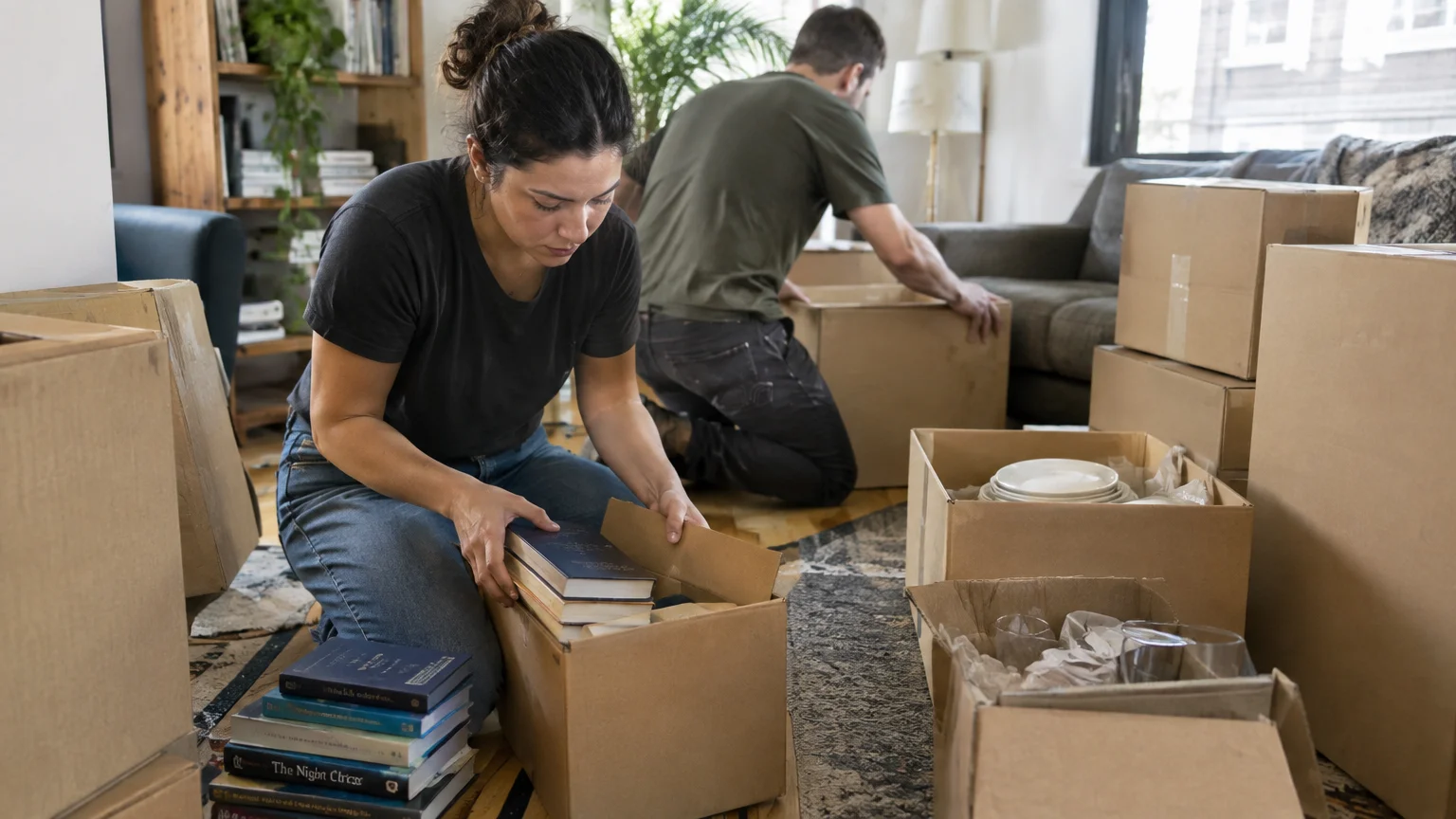
Free moving boxes often come from stores, neighbors, offices, and community groups. The best boxes are clean, dry, and strong enough for the items inside. Start looking several weeks before the day of moving so you have time to sort and replace weak cartons.
Local stores and businesses that often have spare boxes
Grocery stores may have cartons from canned goods, cereal, and home products. Liquor stores often have smaller boxes with firm dividers. Bookstores, pharmacies, restaurants, and office buildings may also have useful cartons.
Ask an employee before taking boxes from a loading area. Some stores save cartons for recycling or reuse. Others have rules about when people may collect them. Calling first can prevent a wasted trip.
Furniture stores may have very large cartons, but these can be hard to carry. Smaller boxes work better for books, dishes, tools, and other heavy goods. Large boxes are better for pillows, blankets, lampshades, and other light items.
Friends, neighbors, and community groups
Friends and neighbors may have boxes left from deliveries or recent moves. A local group can connect people who have boxes with people who need them. People in Asheville may also find leads through neighborhood boards and reuse groups.
Ask whether the boxes stayed clean and dry. Check for stains, smells, insects, and weak seams before bringing them home. A box may look fine outside but still have water damage inside.
Which stores are most likely to give away moving boxes?
Grocery stores, liquor stores, offices, furniture stores, and other retailers receive goods in cartons. They may give those cartons away after they no longer need them. A polite request during a quiet time often works better than asking during a busy rush.
Grocery, liquor, office supply, and furniture stores
Grocery boxes work well for pantry goods, small appliances, and home items. Boxes with bottle dividers can protect glasses, mugs, and small jars. Liquor boxes are often strong, but they may be too small for large belongings.
Office supply stores may have cartons for paper, files, or computer equipment. These boxes are often strong and easy to stack. Furniture stores may offer large cartons, but check that the cardboard has not softened in storage.
A store’s delivery schedule can affect box supply. Boxes may be easier to find soon after new stock arrives. Employees can often explain the best days to ask without setting aside a large pile.
How to ask employees for boxes at the right time
Keep the request simple: “Do you have clean boxes available for moving?” Ask a manager or stock worker instead of taking boxes alone. Accept only what you can carry and use.
Do not block a delivery area or enter staff-only spaces. Bring a vehicle that can keep the cartons dry. If a store says no, thank the employee and try another local business.
Where can you find free moving boxes online?
Online neighborhood groups, local marketplaces, and reuse networks can help you find boxes nearby. Listings may appear and disappear quickly, so check often. Agree on a safe pickup time and place before leaving home.
Neighborhood groups, marketplaces, and reuse networks
Community groups may list boxes after a move, delivery, or office cleanout. Marketplace listings may use terms such as “moving boxes,” “packing boxes,” or “cardboard boxes.” Reuse groups help useful items get a second life.
Read the full listing and ask how the boxes were stored. Ask about pets, smoke, moisture, and pests before arranging pickup. It also helps to ask for box sizes before planning the trip.
People moving in Asheville can search groups that serve nearby neighborhoods. Someone outside the main service area may still find boxes through local offices or friends. Asheville Movers can help Asheville homeowners decide which items need stronger packing supplies.
What to check before accepting boxes from strangers
Pick up boxes in a public place when possible. Bring gloves, and avoid entering an unfamiliar home alone. A trusted friend can join the pickup if the meeting feels uncertain.
Inspect every box before it enters your home. Reject cartons with droppings, live insects, mold, strong odors, or damp cardboard. Safety matters more than collecting the biggest possible pile.
What types of free boxes are safe to use for moving?
Safe moving boxes are clean, dry, firm, and free from crushing or tears. A box should keep its shape when you lift it by the bottom. Strong cartons work best for books, dishes, tools, and other heavy goods.
Choosing strong boxes for books, dishes, and household items
Small boxes are best for books because books become heavy fast. Medium boxes can hold clothing, toys, kitchen items, and small appliances. Large boxes should hold light goods, such as bedding, towels, and soft decorations.
Pack dishes on their edges instead of stacking them flat. Wrap each dish with paper or another clean cushion. Add padding between plates, around the sides, and above the top layer.
Bubble wrap can protect plates when used with other padding. Wrap each plate, place it on its edge, and fill empty spaces. Loose items should not move when you gently shake the closed box.
Boxes to avoid because of moisture, pests, or damage
A box with water stains may have weak cardboard. A crushed corner can fail when you lift it. Torn hand holes, split seams, and soft bottoms are also warning signs.
Avoid cartons that carried raw food, leaking products, chemicals, or strong-smelling goods. Boxes with pest signs should never enter your home. When a box feels unsafe, recycling it is better than risking your belongings.
How many moving boxes do you need?
The number of boxes depends on home size, belongings, storage areas, and packing habits. Count rooms and special areas instead of guessing from one box size. Add extra cartons for items found during the final packing days.
A practical estimate by room and household size
A studio or small apartment may need fewer boxes than a family home. A house with many books, decorations, or stored items may need more than its room count suggests. Kitchens, garages, offices, and children’s rooms often need extra supplies.
Walk through each room with a note. Count shelves, drawers, closets, cabinets, and storage bins. Then add a small reserve for items found during the last few days.
The mix matters as much as the total. A pile of large boxes cannot replace small cartons for books or firm boxes for dishes. Sorting boxes by size helps prevent overloading and makes truck loading easier.
How to adjust your box count for offices and specialty items
An office may need boxes for files, electronics, cables, desk items, and supplies. Files can become heavy, so smaller cartons are safer. Computers and monitors need strong boxes with soft padding and clear labels.
Special items may need more than a regular carton. Lamps, artwork, mirrors, plants, and musical instruments each need a packing plan. Set aside suitable boxes before packing common household goods.
How should you prepare and pack free moving boxes?
Free boxes need preparation before they hold belongings. Inspect each carton, reinforce weak seams, add padding, and label every side. Good preparation helps limit shifting, crushing, and confusion during the move.
Reinforcing, labeling, and organizing reused boxes
Seal the bottom seam with strong packing tape. One strip may not be enough for heavy goods, so add extra tape when needed. Test the box before filling it completely.
Labels should name the room and give a short list of contents. Marking “fragile” can help, but it does not replace careful packing. A simple color system can help movers place boxes in the right rooms.
Keep a short record of important boxes. List items needed soon after arrival, such as medicine, chargers, towels, basic dishes, and work supplies. A separate open-first box can make the first night easier.
Packing heavy and fragile belongings safely
Put heavy items at the bottom, with lighter items above them. Fill empty spaces with paper, towels, or clean clothing. This keeps items from sliding during lifting and transport.
Glassware and dishes need padding on every side. Wrap bowls one at a time and place padding between each piece. Close a box only when its contents sit below the top edge and do not press against the lid.
Never lift a box that feels unsafe. Split heavy goods into two cartons to protect both belongings and the person carrying them. For large moves, Packing Services can help prepare fragile items and organize boxes for loading.
When should you buy moving boxes or rent reusable containers?
Free boxes may not fit every move. Buying new boxes or renting reusable containers can help when you need matching sizes, cleaner materials, or stronger protection. The best choice depends on the items, schedule, and help available.
Situations where free boxes may not be enough
Free boxes can be hard to find in matching sizes. They may have unknown storage histories or weak seams. A tight schedule may leave too little time to inspect and collect enough cartons.
New boxes can help with fragile goods, electronics, artwork, and heavy books. Reusable containers may suit people who want stackable bins with lids. They can also reduce the need to gather, sort, and recycle many different cartons.
A professional move may need special supplies for furniture, glass, appliances, or office equipment. Local Movers can help with loading and transport, while Furniture Movers can handle large items that should not go in ordinary cartons.
How to compare cost, convenience, protection, and cleanup
Look at more than the purchase price. Compare the time needed to find boxes, the risk of damaged goods, storage space, and cleanup after unpacking. Reusable containers may stack well, while free cartons may be easier to find in small batches.
Long-distance moves may need stronger and more even packing materials. Apartment moves may benefit from smaller boxes that fit through narrow halls and elevators. For a cross-country move, Long Distance Movers can explain which items need special preparation before transport.
Key takeaways
- Grocery stores, liquor stores, offices, neighbors, and local groups may have spare boxes.
- Clean, dry, firm cartons are safer than stained, soft, or damaged boxes.
- Small boxes suit books and heavy goods; large boxes suit light, soft items.
- Plates and bowls need padding, edge packing, and filled empty spaces.
- New boxes or reusable containers may work better for fragile items or tight schedules.
Frequently Asked Questions
What is the best place to find free moving boxes?
Local grocery stores, liquor stores, offices, and neighborhood groups are good places to start. People who recently moved may also have clean cartons ready for pickup. Ask before taking boxes, and check each one for moisture, pests, odors, and weak cardboard.
Are grocery store boxes good for moving?
Grocery store boxes can work well when they are clean, dry, and strong. Small cartons are useful for cans, books, and kitchen tools. Avoid boxes with food stains, leaks, soft bottoms, or insect signs.
How should someone pack dishes in reused boxes?
Wrap each dish with clean paper or suitable padding. Place plates on their edges, with cushioning below, between, and above them. The box should have no empty spaces that let dishes shift during carrying.
Can free boxes carry books?
Free boxes can carry books when the cartons are small, dry, and strong. Do not fill a large box with books because the weight may make lifting unsafe. Reinforce the bottom seam, and test the box before moving it.
When should someone rent reusable moving containers?
Reusable containers may help when you want clean, matching, stackable storage with lids. They can also suit a short packing schedule or a move with many standard items. Free boxes may still work for light goods and items packed over several weeks.
Conclusion
Knowing where to get moving boxes for free can make packing easier. The safest plan uses several sources, careful inspections, suitable box sizes, and strong packing methods. Free cartons are useful, but do not use them when their condition is uncertain.
Asheville Movers supports households and offices that need help with packing, loading, or transport. Contact us to discuss the moving help that fits your job.